
An Economy of the Senses
by Arthur Kok
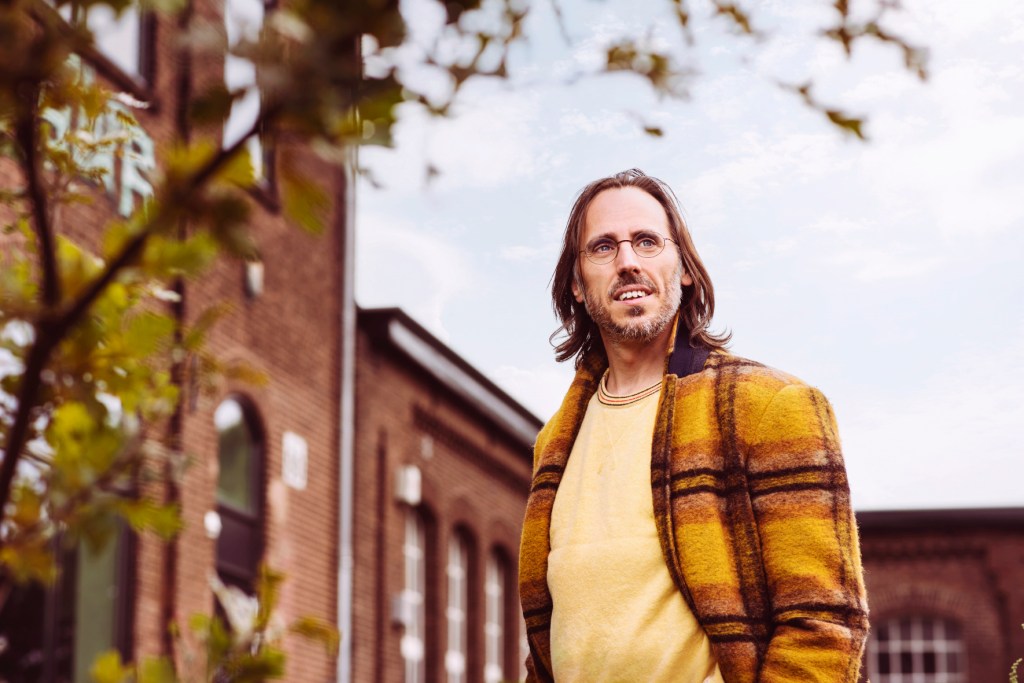
Photo: Madeleine Sars
The education of the five senses is a work
of the entire history of the world
up to now.
Karl Marx
On Friday early morning the 15th of November 2024, I casually walk from the train station Brussels-Central to the Rue Antoine Dansaert. A short but beautiful walk through the city center of Brussels, just as the city is waking up and coming to life. Shops and cafes are being supplied, the suppliers blocking the road with their small trucks, cars honking and moving slowly as snails from one traffic light to the next, businesspeople on the way to appointments, already on their phones – a classic urban imagery of industriousness, of vibrant economic life.
What am I doing there, you ask? Hans Van Regenmortel, a good friend and the organizer of the 2nd Erasmus+ SenseSquared Conference, has invited me to participate in this event at the Erasmushogeschool Campus Kanal. An Educations for the Future MANIFESTO is the promising subtitle. It is an invitation, which I gladly accept, to immerse myself for two full days in what an artistic attitude can bring for the future of education.
I am here not without obligation. I have come to immerse myself for a reason. My task is to figure out if and how artistic educational approaches could be applied to higher economic education, my own field of expertise.
To give you some background: I work at an institute for higher professional economic education in the Netherlands as a teacher, researcher and education developer. We provide education for professions in the fields of accountancy, business organization, real estate, finance, marketing, communication, advertisement, public relations, sales and retail.
That is a mouthful, and also not something easily associated with artistic approaches. But economic education today faces a challenge; and not a small one for that matter. The current ecological crisis is deeply connected to how we organize our economy. It is not that we don’t know it, but it is that we still have very little idea what to do about it.
The problem is not just that we are still teaching economic models that add to this crisis. The crisis is in fact a polycrisis, and economic education is the place where you can most intensely experience the horrifying complexity of it. Not to complain, but this is something most people not directly working in economic professions rarely understand; there really is no simple solution.
Becoming playful
Keeping this honorable yet difficult task in mind, I listen to the presentations and participate in workshops like The Beast – a huge, deconstructed piano, an open invitation to play, to be playful, tapping into our collective sonic creativity; and hEAR DROPS – a didactically sophisticated workshop that focuses on primary school children and introduces them to their interplay between sound and movement. As a group, we work together, we explore the physical environments, ourselves and each other.
What I particularly enjoy is that the workshop leaders approach their subject – sound and movement as constituents of music and dance – as something that already exists within us, the participants. It has to be awakened rather than constructed by following rules, like holding a rhythm or playing a ‘correct’ melody. Quite the opposite of what I remember from my high school music lessons, endlessly playing the same few notes on the vibraphone…
On Saturday, I do The Poetic Self Exercise, a deep dive into the inner depths of body and soul. It is a guided meditation carefully enhanced with well-chosen performative elements of space, color, light and sound, so that all the senses can join in.
What strikes me is that the performativity does not present a theatrical context, creating distance by placing the participant in the traditional role of audience member; instead, the esthetic craftsmanship is used to prevent that the meditation is sacrificed to some spiritual idea of wholeness and would thus be more about personal spirituality than about the universal experience of the artwork.
I have to choose an ancient element: earth, air, water or fire. The necessity to choose creates a new possibility and responsibility for the participant. The artwork does not allow me to approach it in a consumerist fashion. The building blocks are there, the physical elements (light, color, sound, voice) as well as the imaginative ones (earth, air, water, fire), but for the inner journey to become subjective catharsis, I will have to do my part and work for it.
What does it all mean?
So, what can these experiences potentially contribute to economic education? It is my impression that contemporary education is not preparing us very well for a world in which complexity is the dominant factor. Our pedagogies and didactics generally fall short because they focus one-sidedly on structure and modelling.
In education, it is not uncommon to speak about ‘knowledge transfer’. As if knowledge is a consumer good that can be traded and negotiated. Even though everyone knows that knowledge can only be obtained through subjective effort. In that sense knowledge is the non-consumer good par excellence.
Art education as well as artistic approaches have a history of challenging such common beliefs. Not because they are entirely unaffected by it, but because artistic endeavors by nature have a tense relation to any kind of preconceived values and beliefs. Art has a practice of bending the rules and trying out other possibilities. Even if these attempts appear senseless at first sight or turn out to be disruptive.
This is not necessarily a matter of subversion or protest. It is a natural process that is helpful to achieve the desired artistic results. It simply belongs to the craftsmanship of the artist. Artistic creativity is not, to my mind, some emanation of geniality, but the cultivated art of playing.
For this playfulness to be a purposeful and professional action, and not merely a display of idle pretension, cultivating your intuition is indispensable. Yet this focus on the professional development of intuition, so natural for the arts, might also be essential for reinventing economic education.
A critical note on education
This natural emphasis on intuition is precisely the element that contemporary pedagogies are missing. They either focus on craftsmanship without play, or on play without craftsmanship. We call the first knowledge and skills, and the latter personal development. On the basis of this dichotomy, education professionals have fierce discussions about whether the teacher should be a coach or an instructor.
But it is a completely meaningless discussion. What is forgotten is that play and craftsmanship belong together. They mediate each other. Without this mediation personal development and coaching become therapy; and the transfer of knowledge and skills becomes purely instrumental without contributing anything to the higher purpose of knowledge, namely wisdom.
To make it even worse, the choice for either play or knowledge is often dictated by the personal preference of the educator or the bias of the education system rather than the needs of the pupils or students.
By participating in the artistic workshops and listening to the lectures about art and creativity, I start to realize that in the playful exploration of sound and movement, in the deep dive in the inner world of my poetic imagination, there is a seriousness. Not necessarily discipline, but perhaps more something like dedication. A dedication to the material, to the sounds around me, but also to the ears hearing them.
Acknowledging the material
There is a choice, a decision to engage with the material, to accept its propositions. I do not take the material for granted. I do not take the sounds for granted, nor do I take my ears that hear them for granted. The encounter with the world may be playful, but it is definitely not without obligation.
When a child plays with a dog by hurting the dog, pulling its ears and deliberately falling on the dog, we intervene. Of course. Not because it is not play. For the child it is play, but the child has to learn to play responsibly. Responsibility means to acknowledge the nature of whatever you are playing with.
This is not a restriction of playfulness. It is learning how to play in a way that makes us human. In that sense, it is a positive and affirmative intervention that is no different from asking a music student to listen to the natural sounds of the world first, or to become familiar with the physicality of the musical instrument first, before playing a rhythm or a melody.
In my mind, this is the kind of playfulness that contributes to craftsmanship. It is about the element that comes before the purposeful action of making something. It is not against rhythm or melody, or any other product of creativity, but it comes before the ability to construct such a thing. It is about cultivating an awareness of the possibility of rhythm and melody before they come into existence.
Towards an economy of the senses
During the two days of experiences, I gradually begin to understand that creativity does not start with a blank slate. The beginning of any creative process is to acknowledge the material, recognize its existence and become willing to accept its propositions. The starting point is always a re-connection with the environment and yourself. It is about intuition.
Maybe intuition is not simply the straight-forward domain of having an inner feeling or an imaginative idea, but an infinite world worthy of exploration. Intuition is a portal, both sensible and sensitive, that connects the inner world to the outer world. Intuition is essentially about sensibility and reveals that we are part of nature and a community. This is in fact an old wisdom. In ancient Greece, Anaxagoras, the man who famously brought philosophy from Miletus to Athens, knew about it too. He called it Nous.
This acknowledgment of the material is also an important wisdom for any future economy. Nature and community do not oppose our individuality, as economic liberalism tells us. This is an abstraction of the mind. As intuitive beings we experience ourselves as part of a communal nature, and our individuality becomes an expression of this. Perhaps it is the enigma of sensibility, being the general property of all life that at the same time defines each of us as this unique individual.
This insight might also get beyond the current point of harmful resource extraction. We do not have to stop extracting. Animals and plants also extract resources. But we have to transform our mere instrumental approach into an approach that honors the resource. This concerns both our needs as well as the means of satisfying them. We have to honor our encounter with needs and means; and recognize in them the world that is the creator and sustainer of life – not as a cognitive or idealist attitude but as a practice of the senses.
Some very subjective business advice
During the conference I got many questions concerning the economic potentiality of artistic interventions. Particularly how to ‘prove’ their usefulness and impact. From a distance, the arts love to criticize the economy, but of course artists are also entrepreneurs looking for ways to economize their ideas. If not by choice, then by necessity. So, I understand the question, and it is an important one. But there is no easy answer.
Although highly dependent on the circumstances, I generally believe that a strategy for this kind of artistic and educational interventions should not focus on efficiency or quantifiable output measurement. From an economic point of view, efficiency means that you can provide basically the same product but cheaper. I am not sure whether that is the product you want to sell as an artist – or as an educator, for that matter.
Do not try to quantify either. Unless done thoroughly and thus costly, quantification favors short-term returns on investment. It will not get you beyond the so-called quick wins and low hanging fruits. If there are scientific studies and data reports that support your business case, use them. But stay away from theories of change and other forms of accountability fetishism.
However, if people you (want to) work with, most likely policy makers or education managers, keep insisting on numbers and targets, this may be an indication of a problem that is not necessarily related to impact. It probably relates to mistrust. Maybe you just have to find other partners to work with. But it could also be an indication that you are not really open to collaboration. Not because you don’t want to, but because you are not showing collaborative behavior.
Also in business, collaboration is key. I think for artistic approaches the best strategy is to focus on shared values. This is achieved by dialogue. I really understand the feelings of injustice and frustration that come with fighting for what you truly and passionately believe in, but focusing too much on proving the value of an artistic concept is an indication that you are not really open to collaboration; you just want to push your idea no matter what.
For me, this has nothing to do with strategy. This is a purely instrumental engagement with the economy and linked to the kind of economic rationality that I am trying to overcome in my work in economic education. And no, the cause does not justify the means. Fight for what you believe in but fight smart and fight righteously. The market is also an ecology that deserves our recognition.
Arthur Kok (PhD) holds the professorship of applied science “Transforming the Economy” at the institute of higher economic education at Fontys Hogeschool in Tilburg and Eindhoven (NL). He has a background in philosophy, with specialisations in metaphysics and social philosophy, and applies his expertise to the field of applied economy. Formerly, he was the business director of Sounding Bodies, the music and performance arts company of Jacqueline Hamelink.
 SenseSquared